Make-Up Techniques (4)
Previous Page
Eyeliner:
The eyeliner is usually a liquid or waxy stick make-up that is used to accentuate the shape of the eyes and make them appear bolder. It can be applied in a thin line (hence the name eye-LINER) either above or below the eyelashes along the edge of the eyelids.
For daytime wear, your eyeliner should be either light or medium brown, depending on the color of your hair and eyes. In addition, it is often unnecessary to line both the upper and lower lids for daytime wear. Usually, lining the upper lid is sufficient.
Because eyeliner is used close to the eyes it should be replaced often (at least every three-to-six months) to prevent eye infections. You should never share eyeliner with another person.
Eye Shadow:
Eye shadow usually comes as a compressed powder and is applied with a small brush or small sponge-tipped applicator. There are also eye shadows that come in liquid or crayon-type stick forms. The purpose of eye shadow is to create contours and shadows around the eye to accentuate the eye shape. Colors are selected to enhance the natural eye color.
{Note: The act of shading the area around the eye has a physiological origin. Humans are biologically predisposed to find shadowed eyes appealing. The reason for this has to do with sexual attraction and states of arousal. When a woman becomes aroused, the increase in her pulse rate and blood flow causes a natural darkening of the soft tissue surrounding the eyes, which is a sign of her arousal. The act of using artificial products to shade the eyes is designed to imitate this effect and draw the interest of the opposite sex. This biological response is where we get the term 'bedroom eyes'.}
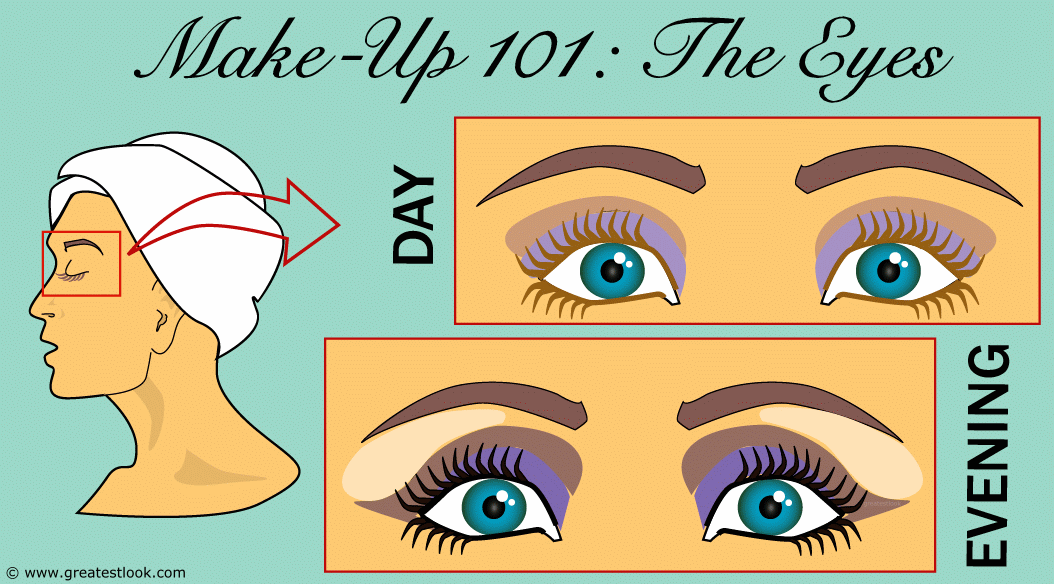
For daytime wear, eye shadow colors should be kept soft and light. Muted colors in a matte finish give a natural appearance to the face. It should be applied carefully to avoid over-applying. Generally, for daywear, you should use a base color on the lid that will accent the eye color with a neutral medium tone along the crease of the eye. Use a soft brush or sponge to blend the colors and remove any lines of demarcation between the two.
For evening wear, eye shadow colors can be darker and more dramatic. This is also the time to use shadows with shimmering or satiny finishes. To apply eye shadow for evening wear, you should begin with a base color along the upper lid that accentuates the natural eye color. Next, use a light, neutral shade to highlight the area immediately below the outer half of the eyebrow. This creates a stronger illusion of depth around the eyes.
Finally, use a neutral shade that is darker than your base color along the crease of the eyelid, following down to the outer of the corner of the eye and in a thin area just below the outer corner of the eye. Blend the colors carefully using a soft brush or sponge to disguise any lines of demarcation between the colors and leave a soft transition.
Eye Shadow should be replaced at least every three-to-six months.
(Trivia Fact: Before the wide-spread availability of eye make-up, women used fireplace soot and sticks of coal to enhance the shape of their eyes.)
Next Page Page 1 Page 2 Page 6